Production targets, sanitation schedules, and safety reviews all land on the same machine.
Processing and packaging lines run on tight production schedules, and they stop for sanitation on a schedule of their own. Equipment gets hosed down with hot water and cleaning chemicals, sometimes every shift. Anything that leaks, flakes, or traps residue becomes a sanitation concern, not just a maintenance item.
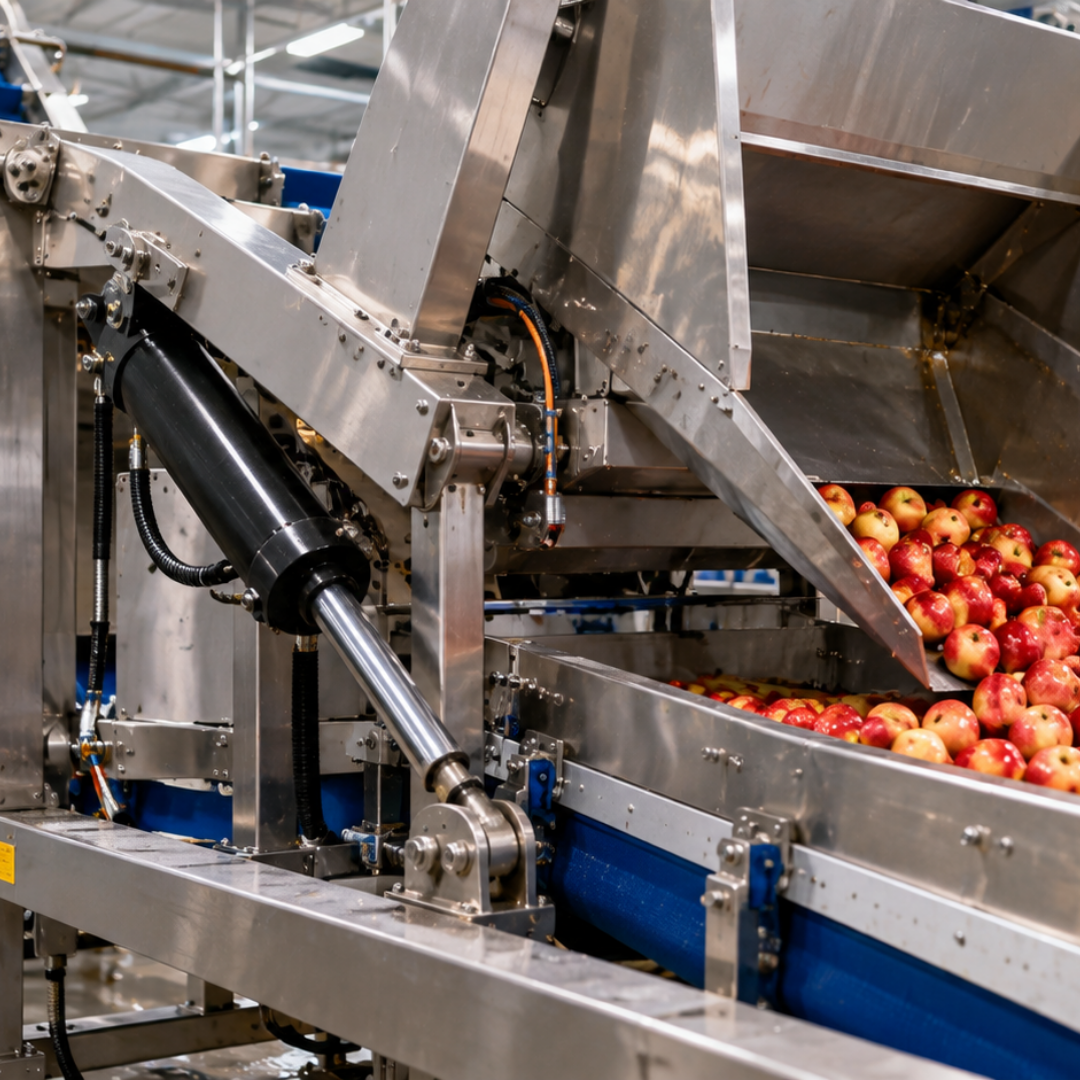
Hydraulic cylinders show up wherever food equipment needs serious force in a compact space: dumping totes and combos, tilting kettles and vats, pressing product, lifting platforms, and positioning heavy components. Those cylinders have to deliver dependable force while fitting the plant's hygiene expectations and the machine's guarding.
Aurelius Manufacturing works with builders of food processing and packaging equipment on custom welded hydraulic cylinders designed around the machine, the cleaning routine, and the cylinder's position relative to exposed product.
Designing hydraulic equipment for a food or beverage plant? Bring Aurelius in while cylinder placement and guarding are still on the table.
Food & Processing Applications
Food equipment builders often use hydraulics where loads are heavy or force has to fit a small envelope, and pneumatic or electric actuators where they are not. The functions below are common places a hydraulic cylinder earns its spot.
Tell us about the machine and its sanitation requirements, and we will look at whether, and how, a custom cylinder fits.


Food and processing machines use fewer hydraulic functions than mobile equipment, but placement and cleanability make the details important. These options are a practical place to start.
Powered extend and retract for presses, dumpers, and lifts that work under load in both directions.
For lifts and tilts that only need power on the way up, letting the load bring the cylinder down.
Slows the cylinder in its final inches of travel so dumpers and tilting vessels settle without jarring product.
Mounts and port locations planned around guarding, clearances, and cleaning access.
Holding and flow control valving close to the cylinder to support secure positioning of lifted loads.
Built-in sensing so dump angles, lift heights, and automated line functions repeat reliably.
Design Considerations
In a food plant, a cylinder is judged by more than force and cycle life. Sanitation crews, safety reviews, and quality programs will all take a look at it.
The considerations below help Aurelius and your engineers design a cylinder that meets those expectations from the beginning.
Have a hydraulic function that keeps causing sanitation or maintenance headaches? Walk us through it, and we will look for a better cylinder solution.
Why Aurelius
Not every function in a food plant needs a custom hydraulic cylinder. When one does, it should be designed for the plant it works in.
Many food equipment builders handle lighter motions with pneumatics or electric actuators and save hydraulics for heavy lifting, pressing, and dumping. Aurelius can help with those hydraulic functions, especially when the mounting, porting, or envelope does not suit a catalog cylinder, or when valving and sensing should be built in.
Our engineers start with the machine and the plant: the loads, the cleaning routine, the guarding, and what maintenance access looks like. If the better answer is a simpler design, a different mounting approach, or keeping the cylinder out of the washdown path altogether, we will say so.
Quality work begins on the receiving dock, where deliveries of tubing and rod are checked for finish defects and turned back if they fall short. Each cylinder goes through testing prior to shipment, and the shop is staffed by people who plan to stay, with training to match.
Aurelius was founded in 1926, and its century of engineering solutions now serves OEMs from prototype through production.
Material and certification requirements vary widely in food applications. Share your material, finish, and compliance requirements at the start, and Aurelius will tell you plainly what it can build to meet them.
Ready to discuss a food equipment application? Start with Build a Cylinder, or reach out for a quote.